
Best time to visit Tottori Sand Dunes at a glance
The best time to visit Tottori Sand Dunes depends on what you want from the sand. The dunes are free to enter and reachable day and night, so you do not need to plan around a closed season. What changes is the weather: hot and shadeless in July and August, cold with possible snow in winter, and gentler in April, May and October. Those three milder months are our own reading of the temperature table below, not an official recommendation.
Wind, rain and light matter as much as the month. If you want the sand together with a guide, the Tottori Sand Dunes tours page compares the day trips and two-day tours, and the activities page explains what operates in which season.
Tottori Sand Dunes weather by month
Climate normals of the Japan Meteorological Agency for the Tottori station, 1991 to 2020. They describe the city, not the dunes, and they are averages, not a forecast for your dates.
| Month | Avg high | Avg low | Rain |
|---|---|---|---|
| January | 8.1 °C | 1.1 °C | 201.2 mm |
| February | 9.1 °C | 1.0 °C | 154.0 mm |
| March | 13.1 °C | 3.1 °C | 144.3 mm |
| April | 18.9 °C | 7.6 °C | 102.2 mm |
| May | 23.8 °C | 12.9 °C | 123.0 mm |
| June | 26.9 °C | 17.9 °C | 146.0 mm |
| July | 30.9 °C | 22.5 °C | 188.6 mm |
| August | 32.6 °C | 23.3 °C | 128.6 mm |
| September | 27.8 °C | 19.0 °C | 225.4 mm |
| October | 22.4 °C | 12.9 °C | 153.6 mm |
| November | 16.8 °C | 7.7 °C | 145.9 mm |
| December | 10.9 °C | 3.2 °C | 218.4 mm |
Highs and lows are monthly means of the daily values, not records. The wettest months are September and December. The yearly mean wind speed at the city station is 3.0 m/s, which says nothing about conditions on the exposed ridges, so treat it as background only.
Our pick: a pottery workshop for a rainy day
A plan for days when rain or wind makes the dunes unpleasant, with a transfer from Tottori Station.
Hand-picked tours, booked through Viator. Prices are indicative starting prices in US dollars (as of October 2026). Tap a tour for live availability and the current price in your currency.
A rainy-day option from Tottori Station
A pottery class with private round-trip transfer and an English-speaking guide, for days when the weather does not suit the sand.
Spring and autumn on the dunes
April, May and October bring highs between about 19 and 24 degrees and lows between about 8 and 13 degrees, which makes a walk over soft sand far less tiring than in midsummer. April is the driest of the three, with 102.2 mm on average. That is a comparison of averages, so a cold or wet day can still happen.
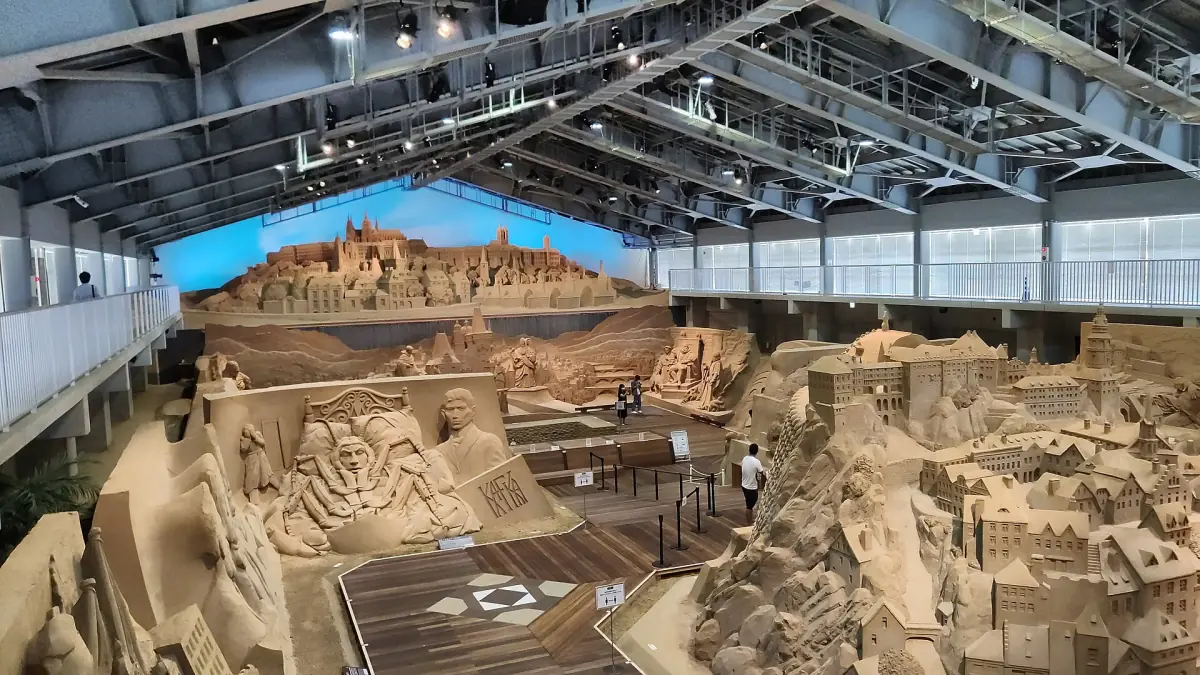
Spring and autumn are also good months to add a second stop. The Sand Museum next to the dunes is an indoor option, and the Uradome Coast boats run from March to the end of November.
Summer heat on the sand
In strong summer sun the sand can reach about 60 °C, and the open dune field has no shade. Wear shoes and socks instead of going barefoot or in sandals, bring water and sun protection and plan breaks. Early morning and late afternoon are easier than midday. July and August are the hottest months, with average highs of 30.9 and 32.6 °C in the city.
Sunsets over the sea
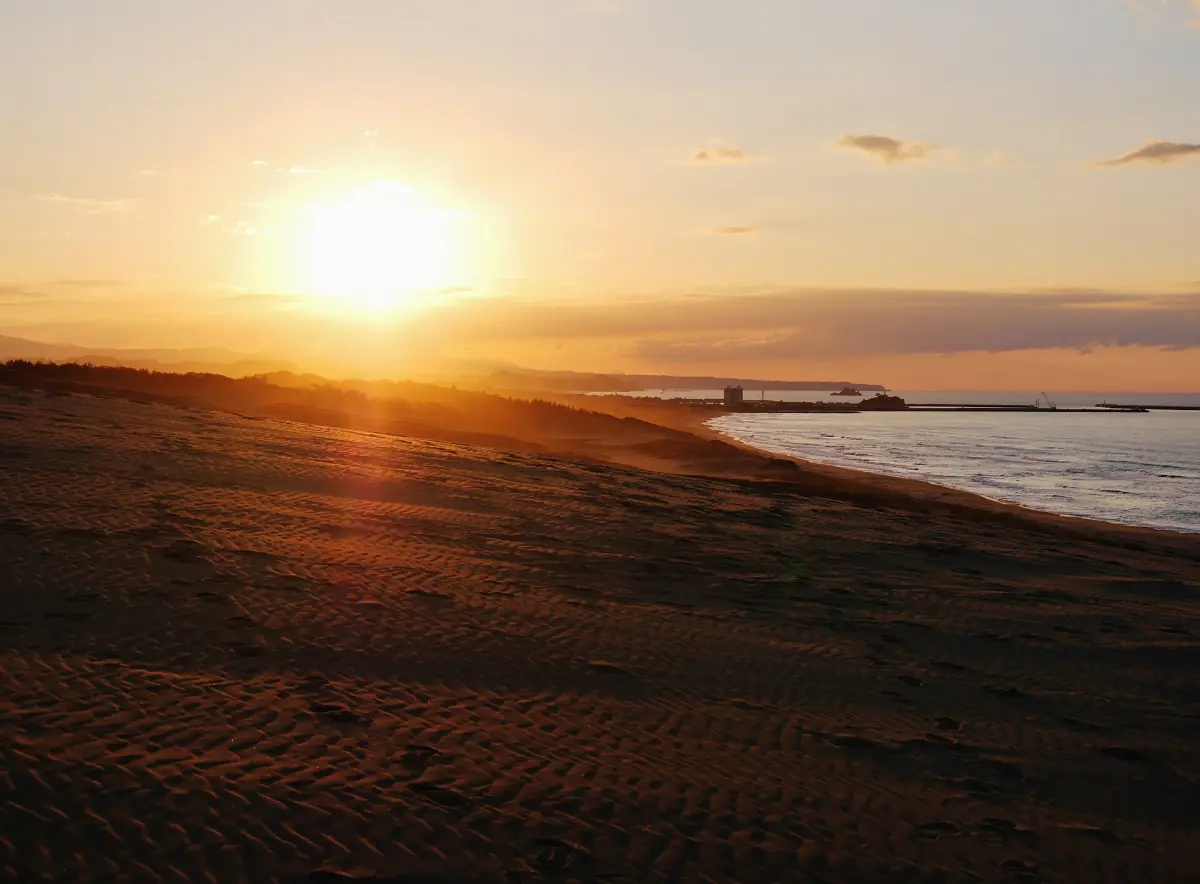
Sunset over the sea is possible roughly from May to August, and only when the weather allows; the sun does not set over the water all year. Evening and stargazing are possible times to visit, with visibility depending on the weather. The dunes are open at night without a ticket, so bring a light, keep to the usual rules (nothing written in the sand, no litter, no vehicles) and plan your way back, since the buses do not run late. Check the bus times on the getting there page.
Tottori Sand Dunes in winter
Snow on the dunes is possible, but it is not guaranteed. At the city station, snowfall days are concentrated from December to March, and that is not the same as a snow cover on the visitor area on each of those days. If a white slope is the reason for your trip, stay flexible and check the forecast the evening before.
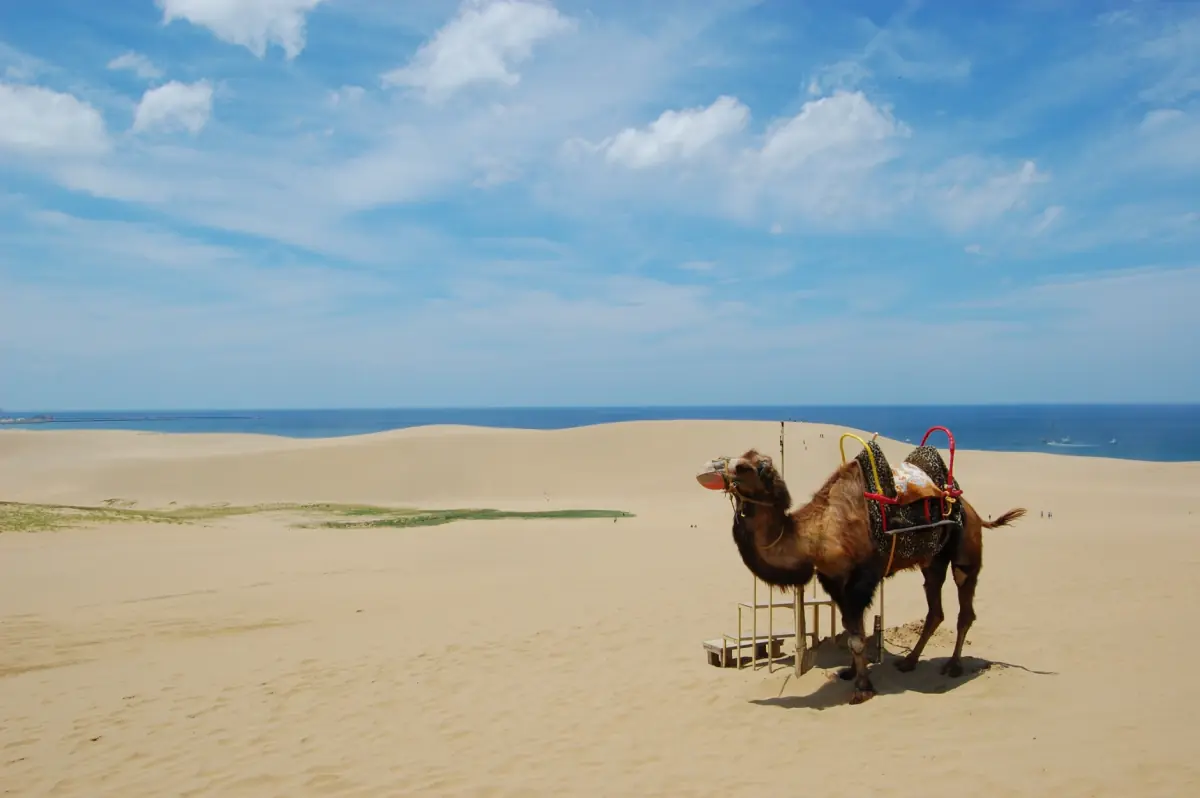
Winter is cold and wet: January has an average high of 8.1 °C and 201.2 mm of precipitation. The camel operator lists shorter hours from December to February, 10:00 to 16:00 for rides, and a ride depends on the day, the weather and the animals, so do not plan the day around one. Warm layers, windproof clothing and shoes that grip are more useful than anything else on a winter visit.
Tottori Sand Dunes in December
December is among the wetter months, with 218.4 mm of precipitation on average and highs near 11 °C. It also brings two announced events. From 21 November to 6 December 2026 the Illusion lighting around the dune car park runs from 18:00 to 21:00, with free entry. In the same period the Sand Museum shows the projection "The Glory of SPAIN" from 16:00, every 30 minutes, about 8 minutes each time. The free outdoor lighting does not replace a museum ticket; admission and hours are on the Sand Museum page. Dates for later years are not announced.
More to plan your dates

Best time to visit Tottori Sand Dunes: frequently asked questions
When is the best time to visit Tottori Sand Dunes?
April, May and October are the milder months in the temperature table, and the milder months are an editorial reading, not an official season. Summer is hot with no shade, and winter is cold with possible snow.
Is there snow on Tottori Sand Dunes in winter?
It is possible but not certain. Snowfall days at the city station fall mainly from December to March, and a snow cover on the visitor area on any given day is not something to rely on.
How hot does the sand get?
In strong summer sun the surface can reach about 60 °C. Wear shoes and socks, carry water and avoid the middle of the day.
Can I visit the dunes at night?
The dunes are reachable day and night without a ticket. Visibility for stars and sunsets depends on the weather, and sunset over the sea is possible roughly from May to August.
What is there to do on a rainy day?
The Sand Museum is indoors, and a pottery class starting at Tottori Station is another option. September and December are the wettest months on average.